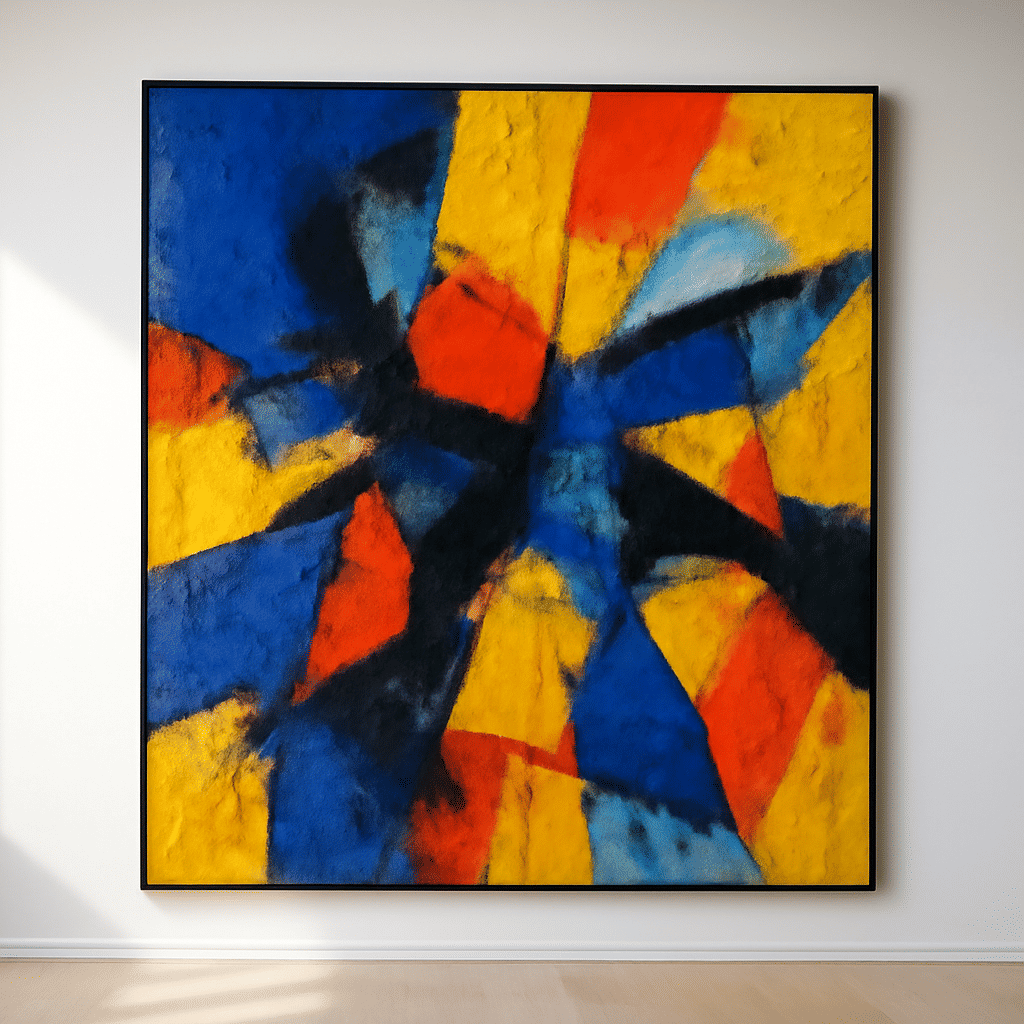
Abstract art has long captivated the imaginations of artists, critics, and viewers alike, challenging traditional perceptions of what art should represent. Emerging in the early 20th century, this innovative style broke away from the representational focus of classical art forms, instead embracing a language of color, form, and line to evoke emotion and provoke thought. It has since become a pivotal movement in the art world, inviting viewers to explore new ways of seeing and understanding.
The essence of abstract art lies in its departure from direct representation. Artists like Wassily Kandinsky, Piet Mondrian, and Jackson Pollock saw the canvas as a platform for free expression rather than a mirror reflecting reality. Kandinsky, often regarded as a pioneer of abstract art, believed in the spiritual potential of colors and forms. He argued that compositions could convey feelings as music does, without the necessity of depicting landscapes or still lifes. His work opened the door for abstract art as a means of conveying spiritual and emotional depth.
The breakthrough of abstract art was marked by the audacious use of non-traditional techniques and materials. The drip painting technique of Jackson Pollock, for example, transformed the process of creating art by emphasizing the physical act of painting itself. Standing above his enormous canvases, Pollock allowed chance and movement to shape his compositions, turning the focus from the final product to the energy and intention behind its creation.
Beyond technique, abstract art has continuously broken boundaries by challenging viewers to engage with art in new ways. Unlike representational art, which guides the observer with its recognizable subjects, abstract art leaves room for personal interpretation. This open-endedness can create a dialogue between the artwork and its audience, encouraging viewers to interpret the imagery based on their own experiences and emotions. Thus, abstract art serves not only as a reflection of the artist's vision but also as a canvas for the viewer's imagination.
Moreover, abstract art has played a critical role in the evolution of modern art, laying the groundwork for numerous contemporary movements. Its influence is evident in the realms of minimalism, conceptual art, and even digital art, each borrowing the abstract's emphasis on concept and experimentation over representation. By divorcing art from its obligation to depict reality, abstract art has granted artists the freedom to explore and express the intangible aspects of human experience.
The innovation of abstract art can also be seen in its accessibility. By stripping away complex narratives and recognizable imagery, abstract art offers a universal language. Anyone, regardless of their background or prior knowledge of art history, can engage with an abstract painting on a visceral level. The emotions evoked by colors, the sense of movement in dynamic shapes, or the tranquility of symmetrical arrangements are experiences that transcend cultural and linguistic barriers.
In conclusion, abstract art represents a breakthrough not just in aesthetic form but in the very philosophy of art itself. By redefining the relationship between the artwork and its audience, abstract art has evolved from a mere visual style into a profound means of communication and exploration. It invites us to step beyond the confines of the visible world and into the realm of imagination, contemplation, and feeling—an invitation that continues to resonate with artists and art lovers around the globe.